Labor Day

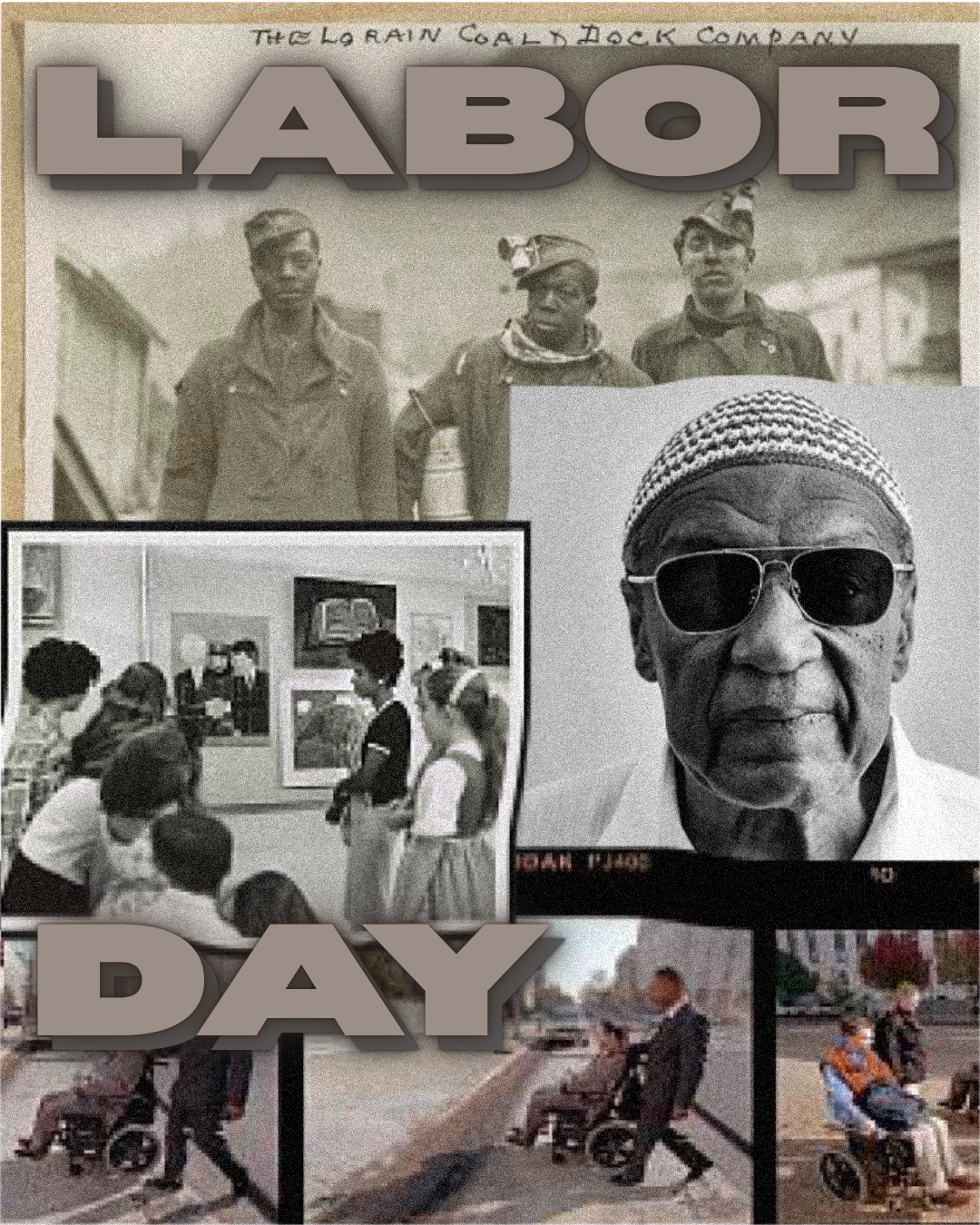
This Labor Day I’ve been thinking about Jerome “Big Duck” Smith, a Civil Rights leader and community organizer who spent his life in New Orleans fighting for the better futures of Black Americans and underserved people across lines of difference. Smith passed away on August 22nd this year at the age of 87.
There are many reasons Smith’s work and legacy will be felt across the nation for decades to come. Although what will appear first when you search his name will be his membership in the Congress of Racial Equality (CORE) and Freedom Riders, and perhaps his work as a founder of Tambourine and Fan, arguably his most impactful work was his quieter, diligent days standing up at local organizing sessions, town halls, and city council meetings in New Orleans.
Watching him address the Louisiana Board of Secondary and Elementary Education in Baton Rouge in 2010, his passion and formidable depth of connection to the issues facing the Black children of his city, of America, seeps through the screen.
“There’s been no charter schools that have come before this body and said ‘We are concerned about sleep deprivation, we are concerned about the failure to service children whose parents are incarcerated’. We have not once indicated how we are going to formalize a pre-K that anchors and roots our children in a kind of long-term deliverance from pre-K to high school in a geographical situation.” - Jerome “Big Duck” Smith
He lent his voice and his labor to generations of youth and carried on the stories, sounds, soul of a Black liberation movement that is still in progress. He understood that systems of oppression must be dealt with honestly, directly and with an eye toward the complexity of Black Americans lived experiences.
At a meeting called between organizations including Greater Treme Consortium, Claiborne Avenue Alliance, the New Orleans Culture Preservation Community, Unity 4Nola, Ole & Nu Style Fellas, and the Treme Sidewalk Steppers to strategize how to stop City Hall from moving into Armstrong Park in 2021, Smith told a story. Like most of his stories, it stuck in my mind and pressed deeply into the wounds faced by marginalized folks across this country. I’d like to share a snippet of that story with you.
In September of 1960, seven students stage a sit-in at a Woolworth’s on Canal Street in New Orleans to protest the store’s refusal to serve Black folks, organized by CORE. It was “the first organized demonstration of its kind in New Orleans” and Smith was one of the seven students protesting. He was arrested and held at the Parish Prison. While held there in a shared cell, Smith recalls that another man was brought in who appeared “disturbed”. The man was unable to respond to fellow inmates who spoke to him and later in the night began to eat his own feces. Smith knew his responsibility was to defend the man. When another inmate attempted to interfere, Smith and his fellows held him back. It was a test. As Smith put it at the meeting, “They sent him in here so they could beat us up, because if we’d have touched that man, they would have ‘rescued’ him and beat us up. But that’s not the lesson. We did not surrender. We stood up for him.”
A well-established playbook of the powerful is to make the marginalized easier to oppress by pitting them against each other. That night in jail, Smith’s white jailers were betting on the inmates inability to look past lines of difference. Because in their mind difference was a provocation to violence, they couldn’t fathom that the inmates would care for the sick man in their midst instead of ostracizing or harming him. It’s what they would have done, after all. But Smith and the other men chose solidarity against the powerful that day. It’s a thread we see throughout Smith’s activism.
I was thinking of that story again today, because so many of our most triumphant moments in the labor movement and in all movements bent towards liberation have come when we unite across lines of difference. The Battle of Blair Mountain, the largest labor uprising in the history of the United States, when striking miners banded together across racial and gender lines in attempt to attempt to unionize the southwestern West Virginia coalfields; The 504 Sit-In in 1977, where Black disability activists like Brad Lomax and Chuck Jackson led a multi-racial coalition of protestors in a 28-day demonstration to hold the government accountable for its blatant disregard of disability discrimination; Lorraine Hansberry’s speech, “A Challenge to Artists” at a rally against the House Un-American Activities Committee in 1962, calling and delivered to artists of all races.
“They (the Nazis) permitted us to feel, in return for our silence, that we were non-participants; merely irrelevant if inwardly agonized observers who had nothing whatsoever to do with that which was being committed in our names.” - Lorraine Hansberry, “A Challenge to Artists”, 1972
I’m sure it’s not a mystery to any of you why these events, these words, these leaders are at the forefront of my mind. The playbook is still in use. Immigrants, Black folks, Transgender and Gender Diverse folks, Disabled folks-- the Trump administration, alongside thousands of state and local municipalities fueled by white supremacy, Christian nationalism, fascism and bigotry, are once again scapegoating the most marginalized among us in an attempt to weaken our movements. They’re pointing us at each other in the hopes that we will do their violent work for them and never look up to see who really turns the wheel of our oppression. A united people is a dangerous people. A people divided across lines of difference is a defenseless people.
This Labor Day, I hope we’re all looking at our neighbors, our friends, our fellow workers, and the people whose names we don’t yet and may never know with a conviction to protect each other. Our struggle has always been and always will be intersectional and intertwined. If we are to carry on the work of the folks who fought before us and cherished us and cherished our better futures, folks like Jerome “Big Duck” Smith, we must- in his words, “become committed to the humanity of each other”.
In solidarity,
Austen